
 English
 Español
 Portugues
 Pусский
 Français
 Deutsch
 العربية
 ไทย
ไทย Türk dili


khung sợi carbon cho máy bay không người lái
Carbon Fiber Frame for Drones: A Comprehensive OverviewIn the rapidly evolving world of drone technology, the materials used in construction play a pivotal role in determining performance, durability, and overall efficiency. Among these materials, carbon fiber has emerged as a top choice for drone frames, offering a unique combination of strength, lightweight properties, and versatility. This article delves into the characteristics, advantages, and applications of carbon fiber frames for drones.What is Carbon Fiber?Carbon fiber is a composite material composed of thin, strong crystalline filaments of carbon. These fibers are typically woven into a fabric and then combined with a polymer resin to create a lightweight yet incredibly strong material. The result is a product that boasts a high strength-to-weight ratio, making it ideal for applications where both durability and weight reduction are critical.Why Carbon Fiber for Drone Frames?1. Lightweight: One of the most significant advantages of carbon fiber is its low weight. Drones require lightweight frames to maximize flight time and maneuverability. Carbon fiber's lightness allows drones to carry more payload or extend their battery life, enhancing overall performance.2. Strength and Durability: Despite its light weight, carbon fiber is exceptionally strong. It can withstand high stress and impact, making it ideal for drones that may encounter rough landings or harsh environmental conditions. This durability ensures a longer lifespan for the drone frame.3. Stiffness: Carbon fiber is known for its high stiffness, which is crucial for maintaining the structural integrity of the drone. A stiff frame minimizes vibrations and distortions during flight, leading to more stable and precise movements. This is particularly important for applications like aerial photography, where stability is key to capturing clear images.4. Corrosion Resistance: Unlike metals, carbon fiber does not corrode. This makes it an excellent choice for drones that operate in humid or saline environments, such as coastal areas or marine applications.5. Customizability: Carbon fiber can be molded into various shapes and sizes, allowing for highly customized drone designs. This flexibility enables manufacturers to create frames tailored to specific applications, whether for commercial, industrial, or recreational use.Applications of Carbon Fiber Frames in Drones- Aerial Photography and Videography: The stability and lightweight nature of carbon fiber frames make them ideal for drones used in capturing high-quality aerial footage. The reduced vibrations ensure smoother shots, while the lightweight frame allows for longer flight times.- Delivery Drones: For drones tasked with delivering packages, the strength and durability of carbon fiber frames are essential. They can handle the additional weight of the payload while maintaining structural integrity.- Racing Drones: In drone racing, speed and agility are paramount. Carbon fiber frames provide the necessary stiffness and lightness to achieve high speeds and sharp maneuvers.- Agricultural Drones: Drones used in agriculture often operate in challenging environments. The corrosion resistance and durability of carbon fiber frames make them suitable for tasks like crop monitoring and spraying.ConclusionThe use of carbon fiber in drone frames has revolutionized the industry, offering a blend of lightweight properties, strength, and durability that is unmatched by traditional materials. As drone technology continues to advance, the demand for high-performance materials like carbon fiber is likely to grow, further solidifying its place as a cornerstone in drone design and manufacturing. Whether for recreational use, commercial applications, or industrial tasks, carbon fiber frames are setting new standards in drone performance and reliability.
Sản phẩm
Danh mục:
-
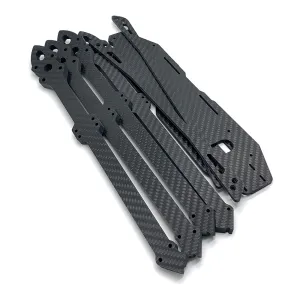
Tấm sợi carbon thân máy bay UAV
Phân loại của họ: Tấm sợi carbonLượt xem: 128Số:Thời gian phát hành: 2025-10-10 17:24:06Tấm sợi carbon thân máy bay XYH sử dụng ma trận sợi carbon + nhựa cấp hàng không vũ trụ, với mật độ 1,6g/cm³ (nhẹ hơn 40% so với nhôm), khả năng chịu nhiệt từ -100oC đến 150oC và độ bền kéo của thép 7-10 lần. Có kích thước 500x500/1000x1800mm, độ dày 0,5-100mm, lý tưởng cho thân máy bay không người lái bằng sợi carbon, khung FPV và thân máy bay UAV, đảm bảo độ bền và hiệu quả bay.Tổng quan về sản phẩmTấm sợi carbon thân máy bay UAV của chúng tôi là vật liệu cao cấp được thiết kế để sản xuất thân máy bay không người lái. Được chế tạo từ cốt sợi carbon + ma trận nhựa hiệu suất cao, nó mang lại t...
Tin tức
Danh mục:
-
[Industry news]Vỏ máy bay không người lái bằng sợi carbon có phải là khuôn...
2025-09-06 10:58:44
Trường hợp
Danh mục:
Không có kết quả tìm kiếm!
Video
Danh mục:
Không có kết quả tìm kiếm!
Tải về
Danh mục:
Không có kết quả tìm kiếm!
Tuyển dụng
Danh mục:
Không có kết quả tìm kiếm!
Sản phẩm được đề xuất
Không có kết quả tìm kiếm!



 Điện thoại